

Modernize Your Business Without Replacing Everything
Digital Transformation Services to Modernize Your Business
Modernize legacy systems, connect fragmented applications, automate workflows, and adopt cloud, data, and AI without disrupting operations. Quickway assesses your environment and delivers transformation in controlled phases.
-
 Legacy System Modernization
-
Data, Analytics & AI Integration
-
Connected Business Applications
-
Application & Product Modernization
-
Business Process Automation
-
Phased Transformation Delivery
-
Post-Launch Optimization & Support
-
Cloud & DevOps Modernization




Trusted by Startups and Growing Businesses Across 15+ Countries
From ambitious startups to scaling enterprises, we help businesses build, launch, and grow digital products with confidence.








When Digital Transformation Becomes Necessary
-
 Legacy Technology: Aging applications become difficult to maintain, integrate, or extend.
-
Disconnected Systems: Applications, databases, and workflows operate independently.
-
Manual Processes: Teams depend on spreadsheets, repetitive approvals, and duplicate data entry.
-
Growth Pressure: Existing technology cannot support increasing users, transactions, or operational complexity.
-
Limited Visibility: Data remains fragmented, making reporting and operational decisions slower.
Quickway evaluates your existing environment before recommending changes. Applications, integrations, workflows, data dependencies, and business priorities are reviewed so transformation can progress without unnecessary disruption.
Why Businesses Choose Digital Transformation?
Digital transformation helps you modernize aging technology, connect operational systems, automate repetitive work, improve data visibility, and introduce new digital capabilities without treating every existing system as something that must be replaced.


Digital Transformation Solutions Offered
Quickway combines consulting, modernization, integration, automation, cloud, data, AI, and application engineering to address different transformation requirements without forcing you into a single technology path.


Consulting & Strategy
-
Technology Assessment
-
Architecture Evaluation
-
Workflow Analysis
-
Transformation Planning
-
Prioritized Roadmaps
-
Technology Recommendations
Organizations that need to understand where modernization should begin before committing to major technology changes.
A practical transformation roadmap based on existing systems, dependencies, business priorities, and measurable objectives.
Assessment & Review — Current applications, integrations, workflows, technical gaps, risks, and transformation opportunities are reviewed before implementation priorities are established.
Legacy System Modernization
-
Legacy Application Assessment
-
Modernization Planning
-
Application Redevelopment
-
Integration
-
Data Migration Support
Organizations operating applications that are difficult to maintain, integrate, extend, or support.
Modernized applications that retain valuable business logic while supporting current operational requirements.
Assessment & Review — We review the existing architecture, dependencies, data structures, integrations, and modernization requirements before determining whether to retain, rebuild, integrate, or replace components.
Cloud Adoption & DevOps
-
Cloud Migration Planning
-
Application Deployment
-
CI/CD
-
Infrastructure Automation
-
Cloud Environment Configuration
Organizations whose infrastructure limits application deployment, flexibility, performance, or operational efficiency.
A more flexible application environment with improved deployment processes and infrastructure management.
Assessment & Review — Existing infrastructure, applications, deployment workflows, dependencies, and cloud requirements are evaluated before migration or modernization begins.
Business Process Automation
-
Process Mapping
-
Approval Workflows
-
Workflow Automation
-
Notifications
-
Application Integration
-
RPA Where Appropriate
Teams handling repetitive approvals, manual data entry, reporting, handoffs, or operational coordination.
Fewer manual steps, more consistent workflows, and reduced time spent on repetitive operational activities.
Assessment & Review — Existing workflows are mapped to identify unnecessary steps, duplicate work, approval bottlenecks, and suitable automation opportunities.
Data, Analytics & AI Integration
-
Data Integration
-
AI/ML Integration
-
Dashboards
-
Predictive Analytics
-
Data Pipelines
-
Intelligent Application Features
Organizations that need better use of operational data or defined AI capabilities within existing applications.
More accessible business information and intelligent capabilities connected directly to operational workflows.
Assessment & Review — We evaluate data sources, application environments, business requirements, integration points, and potential AI use cases before implementation.
Application & Digital Product Modernization
-
Application modernisation
-
UX Improvements
-
API Integration
-
Web and Mobile Applications
-
Application Redevelopment
Organizations whose customer-facing or internal applications no longer support current user or business requirements.
Applications that better support current workflows, integrations, users, and digital experiences.
Assessment & Review — Existing applications, interfaces, APIs, user workflows, technical limitations, and modernization requirements are reviewed before development begins.
Post-Launch Support & Continuous Improvement
-
Application Maintenance
-
Optimization
-
Performance Monitoring
-
Enhancements
-
Issue Resolution
-
Technical Support
Organizations that need continued support after transformation initiatives move into production.
A reliable technology environment that can continue adapting as business requirements change.
Assessment & Review — Application performance, issues, usage patterns, enhancement requirements, and future priorities are reviewed through ongoing support cycles.
How Quickway Delivers Digital Transformation
Whether you are modernizing one application or coordinating multiple systems, Quickway adapts the delivery approach around your existing environment, transformation priorities, and operational requirements.
-
Existing systems and transformation requirements are assessed.
-
Priorities, dependencies, and implementation phases are
defined.
-
Specialists are aligned around the required technology and
workflows.
-
Solutions are developed, integrated, tested, and rolled out in
controlled stages.
-
Performance is monitored with ongoing optimization and
support.
Business Benefits of Digital Transformation
Digital transformation helps organizations improve operational efficiency, modernize technology, connect systems, and introduce new capabilities without increasing unnecessary technical complexity.


How Digital Transformation Helps You Grow
Digital transformation creates a more connected technology foundation that allows organizations to improve current operations while preparing for future requirements.
| Business Goal | How Quickway Helps |
| Modernize Technology | Upgrade aging applications in controlled phases |
| Improve Efficiency | Automate repetitive workflows and processes |
| Connect Systems | Integrate applications, APIs, databases, and data |
| Improve Visibility | Connect data with dashboards and reporting |
| Add New Capabilities | Introduce cloud, AI, analytics, and mobile solutions |
| Reduce Operational Risk | Use phased implementation and controlled rollout |
Digital Transformation Case Study
TPMS needed to improve planning and execution across its operations while maintaining visibility and coordination between teams.
The Challenges:
-
Planning and execution required better synchronization across
locations
-
Manual planning processes limited operational efficiency
-
Management needed clearer visibility into urgent tasks,
resources, and progress
-
The system required dynamic reporting and configurable
workflows

What Quickway delivered:
-
Built a planning and scheduling platform for web and mobile
users
-
Added dynamic reporting and configurable interfaces
-
Implemented TOC-aligned workflows and dashboards
-
Supported phased deployment during operational rollout
How Quickway approached the engagement:
Quickway connected planning, scheduling, execution, monitoring, and reporting into a unified operational workflow instead of addressing each requirement as an isolated function. Web and mobile capabilities supported different user requirements while phased deployment helped reduce operational disruption.
Measurable Outcomes:
Operational Performance & System Adoption

Throughput
On-Time Delivery

Plan Time
Collaboration
Adoption
Daily Usage
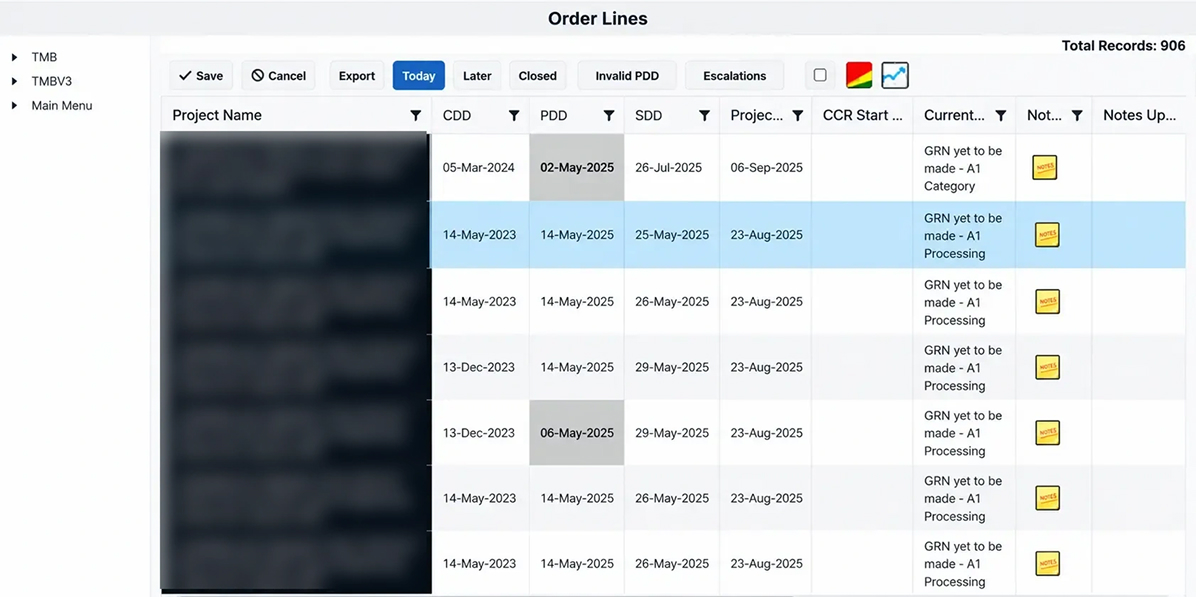
Business Impact
The transformation improved planning efficiency, operational visibility, collaboration, and management usage while giving TPMS a connected environment for daily operational execution.
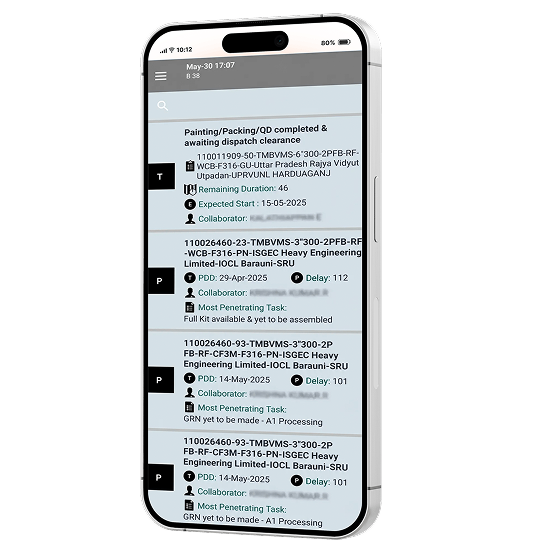
Why This Matters for Businesses:
The engagement demonstrates how existing operational systems can be modernized around measurable business requirements rather than replaced through one large transformation project.
Quickway understood that our challenge was not just software development—it was making planning, scheduling, and execution work together across the business.
Manoj Agarwal Founder (TPMS)Common Challenges Businesses Face
Organizations often recognize the need for modernization but face operational and technical barriers when transformation involves existing applications, data, integrations, and teams.

Critical Processes Depend on Legacy Applications
Important workflows continue to rely on applications that are difficult to maintain or integrate.

Systems Operate in Isolation
ERP, CRM, databases, and internal applications hold information separately, creating duplicate work and inconsistent data.

Manual Processes Continue Growing
Spreadsheets, approvals, reporting, and repetitive data entry consume increasing amounts of employee time.

Technology Changes Risk Operational Disruption
Large migrations or replacements can affect revenue-critical workflows if implementation is not carefully phased.

Data Remains Difficult to Use Effectively
Information exists across multiple systems but cannot easily be connected for reporting, analysis, or decision-making.

New Technology Lacks a Clear Use Case
Cloud, AI, or automation initiatives may be considered without a defined operational requirement or measurable outcome.

These challenges often become more visible as organizations grow. A structured transformation approach helps address technology dependencies while keeping implementation connected to operational priorities.
Digital Transformation vs In-House vs Traditional Agency
A transformation partner can provide broader technology coverage and phased delivery, while internal teams offer direct ownership and traditional agencies may focus on a defined implementation scope.
Resource Availability
Technology Coverage
Existing-System Assessment
Integration Capability
QA Process
Scalability
In-house
Recruitment required
Limited by internal team
Internal knowledge
Depends on team
Internal
Requires hiring
Digital Transformation Partner
Existing specialists
Multi-disciplinary
Included before implementation
Cross-system engineering
Structured delivery reviews
Phased capacity
Traditional Agency
Depends on availability
Varies by agency
Often requires discovery
Project-dependent
Varies
Depends on engagement
Who Uses Digital Transformation Services
Quickway Infosystems works with organizations at different stages of technology maturity, from businesses modernizing legacy applications to companies scaling digital platforms and connecting complex system environments.

Organizations Modernizing Legacy Systems
Businesses are moving away from outdated applications, frameworks, or infrastructure while preserving the business logic and data their operations depend on.

Companies Running Multiple Disconnected Platforms
Organizations using separate ERP, CRM, databases, cloud platforms, and third-party applications that need information to flow reliably between them.


Teams Reducing Manual Workloads
Operations, finance, HR, and service teams looking to replace repetitive approvals, reporting, data entry, and document handling with structured digital workflows.

Companies Adding New Digital Capabilities
Businesses introducing AI, customer portals, mobile applications, or analytics alongside their existing technology rather than replacing it.

Organizations Undergoing Major Technology Change
Businesses managing platform migrations, application upgrades, cloud adoption, or system consolidation that require phased planning and controlled execution.
The Quickway SCALE™ Transformation Framework
A structured framework that helps organizations move from technology assessment to implementation, rollout, measurement, and continuous improvement.
Systems & Strategy Assessment
We review your applications, infrastructure, workflows, integrations, data environment, and business requirements to understand the current state before defining transformation priorities.
Change Prioritization & Planning
Transformation initiatives are prioritized according to business impact, technical dependencies, complexity, operational risk, and implementation requirements.
Architecture & Application Modernization
We define the technical approach and begin modernization, integration, automation, cloud adoption, application development, or data initiatives based on the approved roadmap.
Launch, Integration & Quality Assurance
Solutions are integrated and tested before controlled rollout. Deployment phases, migration activities, quality checks, and operational requirements are considered throughout implementation.
Evaluate, Optimize & Evolve
Post-launch performance is monitored against agreed measures, with optimization, maintenance, enhancements, and subsequent transformation priorities managed through an ongoing improvement cycle.
Built for Controlled Transformation
-
Defined transformation roadmap
-
Phased implementation approach
-
Cross-technology engineering capabilities
-
Integration and quality assurance checkpoints
-
Documentation and knowledge transfer
-
Ongoing optimization and support
This framework keeps transformation connected to measurable operational requirements rather than treating technology implementation as the final objective.
Engagement Models Built Around Your Needs
Choosing the appropriate engagement model allows you to align transformation support with your project scope, internal resources, and implementation requirements.
| Model | Best For |
| Dedicated Engineering Support | Long-term transformation programs |
| Managed Transformation Team | Multi-system implementation |
| Fixed Scope Project | Defined modernization initiatives |
| Hybrid Engagement | Multiple transformation requirements |
Dedicated Engineering Support

Assign specialists who work as an extension of your internal team.
Best For: Organizations managing long-term modernization programs requiring consistent engineering capacity.
Managed Transformation Team
Quickway manages assessment, engineering, integration, testing, rollout, and ongoing support.
Best For: Organizations seeking external ownership of day-to-day transformation execution.
Project-Based Engagements
Defined scope with agreed deliverables and implementation requirements.
Best For: Application modernization, cloud migration, integration, automation, or defined digital initiatives.
Ongoing Transformation Partnership
Continuous engineering, maintenance, optimization, and enhancement support.
Best For: Organizations undertaking transformation across multiple phases or business systems.
Overflow & Specialist Support
Additional technology capacity for specific transformation requirements.
Best For: Internal teams facing temporary capacity gaps or specialist technology requirements.
Technologies Supporting Digital Transformation
This section outlines the core technology environments Quickway works with to support modernization, integration, application development, cloud adoption, automation, data, and AI initiatives.
Enterprise & Commerce
AI & Emerging Technologies
Platforms include:
Industries We Serve
The industries Quickway supports have different operational workflows, technology environments, data requirements, and customer journeys, so transformation initiatives are aligned to each organization's specific requirements.

Manufacturing & Engineering
Modernization focuses on planning, production, scheduling, operational visibility, ERP integration, and workflow automation.

Healthcare
Transformation can address application integration, workflow digitization, data management, and operational applications.

Finance & FinTech
Projects commonly focus on legacy modernization, APIs, process automation, data analytics, and financial applications.

Recruitment & HR
Transformation can connect recruitment platforms, AI workflows, candidate screening, verification, and centralized candidate data.

Retail & E-Commerce
Modernization can connect inventory, order, payment, CRM, customer-facing applications, and cloud infrastructure.

Education & EdTech
Projects can modernize learning platforms, administrative workflows, mobile applications, and operational systems.

Logistics & Supply Chain
Transformation can improve planning, tracking, real-time data integration, reporting, and operational coordination.

Travel & Hospitality
Modernization can connect booking, customer, operational, and back-office applications for smoother data flow and service delivery.

Technology & SaaS
Modernization can improve legacy applications, cloud infrastructure, APIs, data platforms, workflow automation, and customer-facing software.
Our Digital Transformation Commitment
A structured delivery approach keeps transformation organized from assessment through implementation, rollout, optimization, and ongoing support.
-
Phased transformation delivery designed to reduce unnecessary operational disruption.
-
Clear ownership and documentation covering applications, workflows, architecture, and delivered solutions.
-
Quality assurance checkpoints across development, integration, testing, and rollout.
-
Controlled project access supporting protection of source code, business data, and technical information.
-
Ongoing support and optimization after deployment as requirements and operating conditions evolve.
This commitment helps organizations modernize technology while maintaining operational continuity, visibility, ownership, and long-term adaptability.

Ready to Modernize What Your Business Can Do?
Whether you need to modernize one legacy application, connect multiple systems, automate workflows, or begin a broader transformation program, Quickway helps you move forward in controlled phases.
-
Current technology environment assessed before implementation
-
Transformation priorities mapped around business requirements
-
Phased roadmap designed around operational dependencies
-
Engineering, integration, QA, and post-launch support
available
Common Mistakes in Digital Transformation Partnerships
Many organizations focus on technology capabilities but overlook the delivery processes that determine whether transformation works within their existing environment.
-
Choosing technology before understanding existing
dependencies.
-
Treating the entire transformation as one large rebuild.
-
Automating inefficient workflows without reviewing the process
first.
-
Introducing AI without a defined business use case.
-
Ignoring migration, integration, and testing requirements.
-
Measuring project completion instead of operational outcomes.
A structured transformation partner with phased delivery, integration planning, QA, documentation, and post-launch support reduces these risks.

Frequently Asked Questions
Yes. Quickway evaluates existing applications and determines what should be retained, integrated, modernized, or replaced based on business and technical requirements.
Services include transformation consulting, legacy modernization, cloud adoption, DevOps, process automation, data and AI integration, application modernization, and post-launch support.
Yes. A focused transformation initiative can address a single application, workflow, integration, or operational problem before expanding into additional phases.
Focused initiatives may take 8–12 weeks, while multi-system and enterprise programs can require several months depending on integrations, data, users, systems, and implementation complexity.
Yes. Quickway works across established and modern technology environments and assesses your current stack before recommending a modernization approach.
Phased implementation, integration testing, migration planning, controlled releases, and staged rollout help reduce disruption to ongoing operations.
No. Quickway can provide engineering, integration, QA, deployment, and support. An internal business or technology contact can still help provide system knowledge and approvals.
Focused initiatives typically start at $25,000, multi-system programs can range from $75,000–$250,000+, while larger enterprise programs may exceed that based on scope and complexity.
AI should be introduced when it solves a defined business problem such as matching, recommendations, document processing, predictive analysis, or intelligent workflows.
Yes. Post-launch services include maintenance, monitoring, issue resolution, optimization, enhancement development, and continued technical support.
Start With a Digital Transformation Assessment
A focused assessment identifies legacy systems, disconnected applications, workflows, and data gaps causing operational friction. Quickway evaluates your environment, priorities, and dependencies to define what to address first.
-
Identify the highest-impact transformation opportunities
-
Understand system, integration, and workflow dependencies
-
Prioritize modernization, automation, cloud, data, or AI
initiatives
-
Define a practical roadmap for phased implementation